• Skip to primary navigation
  • Skip to main content
  • Skip to primary sidebar
The Provider Loft

The Provider Loft

Supporting small and medium NDIS and health providers in Australia

  • Home
  • About Us
  • Shop
  • Online Training
  • Cart
  • Articles
  • Contact Us
  • Show Search
Hide Search

Provider Tips

What’s going on with NDIS AAT appeals?

admin · 21 September 2022 · Leave a Comment

Yesterday, we listened in on the “What’s going on with NDIS AAT Appeals?” livestream hosted by Every Australian Counts and Disability Advocacy Network Australia. The livestream was a conversation about NDIS participant appeals of National Disability Insurance Agency (NDIA) decisions to the Administrative Appeals Tribunal (AAT). Conversation participants included the Minister for the NDIS Bill Shorten, NDIA Chief Counsel Matt Swainson, NDIS advocates, and NDIS participants.

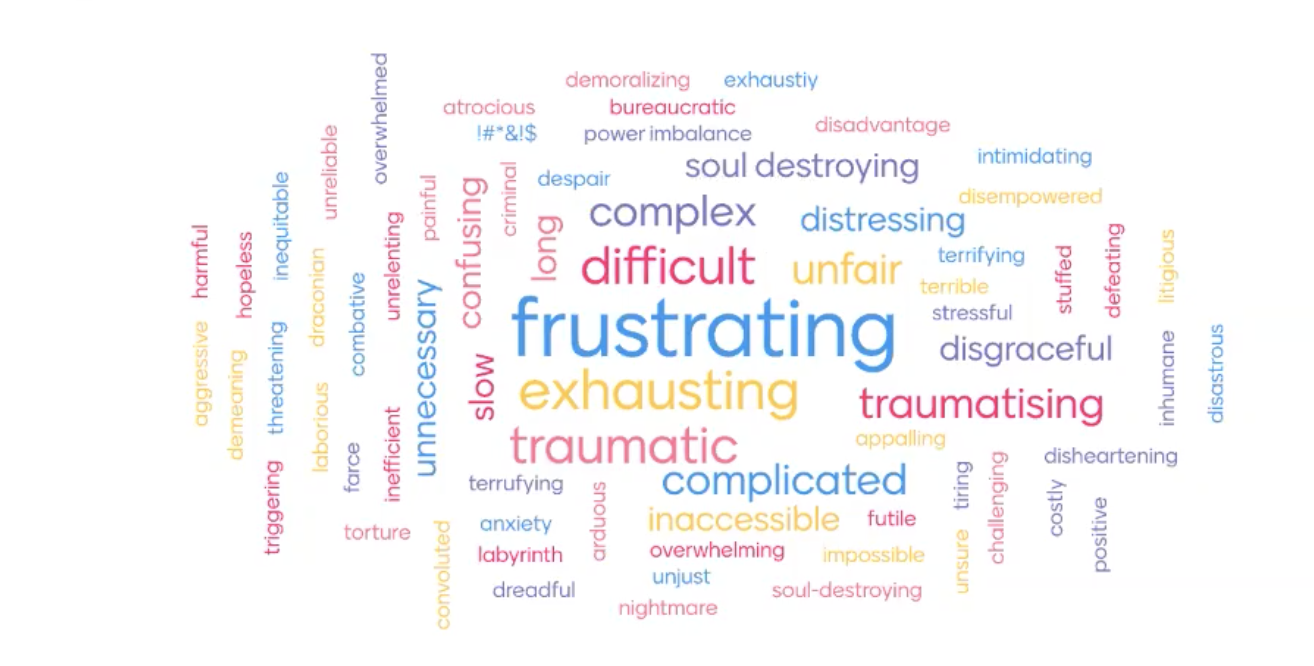
At the start of the conversation, non-Government participants were asked to sum up the AAT appeals process in one word. Here is a screenshot of the wordcloud (about 110 responses): 
As part of the new Labor Government, Minister Shorten was keen to highlight that he does not support an adversarial approach with NDIS participants, and has told the NDIA that they are now “in a different world”. He acknowledged that there was a need to rebuild trust and fix problems with the NDIS. According to the Minister, under the previous Coalition Government:

  • external reviews of NDIA planning decisions increased by 400%;
  • appeals of NDIA decisions as a percentage of NDIS participants more than doubled;
  • the NDIA received about 250 enquiries per month from participants experiencing problems with the system – this increased to 1,250 enquiries per month when the Labor Government took over; and
  • there were 4,501 active NDIS appeal cases in the AAT by the time of the last election. 

He described internal NDIA reviews as opaque and unaccountable and has sought to decrease the number of decisions going to appeal to the AAT since the election. As at 19 September 2022, the number of active cases before the AAT has apparently dropped by 10% and is now “under 4000”.

Alternative Dispute Resolution to deal with Legacy Cases

The Minister said he wanted to introduce an alternative dispute mechanism in an attempt to decrease the backlog of cases at the AAT. According to the Minister, the model would include:

  • the creation of an ‘Oversight Committee’ to look at legacy cases and chaired by former Federal Disability Discrimination Commissioner Graeme Innes and include members from the disability sector including advocates; 
  • the appointment by the Oversight Committee of independent expert reviewers to “blitz” the thousands of cases currently before the AAT. The experts would seek to resolve outstanding cases and make offers to participants; 
  • the following features of the proposed alternative dispute resolution (ADR): 
    • entirely voluntary for NDIS participants to use; 
    • run concurrently with the AAT appeal process – so participants would not be disadvantaged or lose access to (or their queue spot in) the AAT appeals process; 
    • access for participants to a 1800 number if they had questions about the ADR, with NDIS advocates providing assistance via the hotline; 
    • participants could accept or reject the decision of the ADR; and
    • NDIS participants would have an opportunity to consult with lawyers, if an offer was made, so they could obtain advice; and
  • a trial/pilot scheme of 15-20 matters and then the reviewers tackling 2000+ cases before Christmas 2022.

Changing processes

In addition, the Minister would like to undertake a review of NDIA processes to create a less adversarial, more efficient process including:

  • improving the initial planning process for participants;
  • greater transparency of internal review of NDIA decisions;
  • the provision of written reasons for NDIA decisions; 
  • providing model litigant rules in all cases; and
  • a recognition there has been an overuse of external lawyers, which has created an unfair “David and Goliath sort of struggle” for NDIS participants.

In response to a question about the ongoing nature of the ADR, the Minister indicated he wanted to streamline the system so:

  1. a lot more of the planning decisions are made in-house at the NDIA;
  2. there is greater communication between NDIS planners and participants;
  3. there is continuity between an NDIS planner and an NDIS participant and their family;
  4. there is availability of a decision review by the NDIA; and 
  5. if a participant is unhappy about the outcome of an internal review, access to an experienced independent mediator via the ADR.

The Minister said he did not want the NDIA to “lawyer-up” or for the process to become a process of attrition for NDIS participants. The focus should be on resolution, not playing games. He wanted to resolve matters in the interests of the participants, with support from advocates.

Settled positions

In response to a question about NDIS participants needing to go repeatedly to the AAT to have NDIA decisions overturned, in circumstances where supports had previously been funded, Matt Swainson said that the NDIA general principle would be that if the NDIA had agreed to a position, or if the evidence showed that the AAT had made a ruling on a particular support, then the ruling should be the position of the NDIA, and should remain in place without the need for the participant to seek support from the AAT (subject to where circumstances may have changed).

Guidelines

In response to a question about if it was going to be necessary for the NDIA to speak with participants during the internal review process (as was not the case under the previous Government), Matt Swainson said that operational guidelines may need to be changed so that NDIA staff must speak with participants (and/or advocates) prior to making decisions following an internal review, however he understood that NDIA staff were now contacting participants prior to making making a decision.

Whilst the Minister acknowledged that all NDIS participants are unique individuals, he advocated for the NDIA to publish clearer guidelines and previous decisions so as to make it easier for NDIS participants and planners, and not have NDIS participants needing to re-argue over things that were common sense and common claims. 

Training

A question was asked about the skills and knowledge of NDIA staff with the questioner citing an example of NDIA staff not knowing about a particular decision of the Federal Court and not understanding about the validity of the decision.

Matt Swainson acknowledged that training of NDIA staff was a “big piece of the puzzle” and committed to further training of NDIA staff. He acknowledged that a lack of training was a problem and publishing guidelines about how AAT or Federal Court decisions will be applied is needed.

Conclusion

The Minister acknowledged that people had been let down by the NDIA. He stressed that the Government couldn’t change everything immediately, however he wanted to work with the disability sector and build trust. 

Conversation participants were asked to provide some feedback at the end of the one-hour conversation about how they felt about the discussion. Here is a screenshot of the responses:

We look forward to reading more about the formation of the Oversight Committee, the ADR process for legacy cases, better training (and retention) of NDIA staff, and respectful outcomes for NDIS participants.

The recording of the livestream is available via the Every Australian Counts Facebook page at: https://www.facebook.com/everyaustraliancounts/videos/782013843134082

Updated NDIS Participant Booklets

David Kinnane · 1 September 2022 · Leave a Comment

Recently, the National Disability Insurance Agency (NDIA) updated three of its information booklets for National Disability Insurance Scheme (NDIS) participants.

The booklets are:

  • Booklet 1: Applying for the NDIS  
  • Booklet 2: Creating your NDIS plan  
  • Booklet 3: Using your NDIS plan  

The booklets are available in PDF, Word, and Easy Read versions from the NDIS website here.

We understand the booklets will soon be available in 17 different languages, as well as an Auslan video translation. 

The Word versions of the booklets are particularly helpful as they allow participants to include notes, goals, actions, questions and ideas in the documents.

We plan to share the updated booklets with our clients who are considering applying to the NDIS, preparing for a first planning meeting with an NDIA representative, or who are going through the NDIS plan reassessment process. 

The new look booklets include recent changes to the NDIS Act.

Change to short notice cancellations under the NDIS Pricing Arrangements and Price Limits 2022-23

David Kinnane · 1 July 2022 · Leave a Comment

On 22 June 2022, the National Disability Insurance Agency (“NDIA”) published pricing arrangements for the National Disability Insurance Scheme in its NDIS Pricing Arrangements and Price Limits 2022-23 (“Pricing Arrangements”), to take effect on 1 July 2022.

Amongst other things, the NDIA has modified the definition of short notice cancellation in the Pricing Arrangements.

(1) Short Notice Cancellation

A short notice cancellation is defined in the Pricing Arrangements as when a NDIS participant:

  • doesn’t show up for a scheduled support within a reasonable time (e.g. in the event the NDIS participant should be attending a clinic where the NDIS provider is located); or
  • is not present at the agreed place within a reasonable time when the NDIS provider is travelling to deliver the support (e.g. in the event the NDIS provider provides the support at the NDIS participant’s home or a third party location),

and

  • has given less than seven clear days’ notice for a support.

This means an NDIS participant should give an NDIS provider at least seven clear days’ notice of the cancellation of a support.

The definition has been simplified from a two-tier system (two or five clear business days) notice, depending on the duration and cost of the support under the 2021-22 arrangements, to a single definition based on the number of days (rather than business days).

(2) Claiming for a Short Notice Cancellation

In the event of a short notice cancellation, an NDIS provider is able to claim 100% of the agreed fee associated with the support from the NDIS participant’s plan, provided that all of the following conditions are met:

  • the Pricing Arrangements set out that NDIS providers can claim for short notice cancellations in relation to the relevant support item; and
  • the proposed charges for the activities comply with the Pricing Arrangements; and
  • the service agreement between the NDIS provider and NDIS participant specifies that short notice cancellations can be claimed; and
  • the NDIS provider was not able to find alternative billable work for the relevant worker and was required to pay the worker for the time that would have been spent providing the support.

Takeaways

In order to claim for a short notice cancellation, NDIS providers should:

  • check that short notice cancellations can be claimed in relation to the relevant support item under the Pricing Arrangements;
  • ensure that their charges comply with the Pricing Arrangements;
  • check that the service agreement between them and an NDIS participant specifies that short notice cancellations can be claimed (and, if required, amend the service agreement with a variation signed by the NDIS participant and NDIS provider); and
  • be able to show that they could not find alternative billable work for the relevant worker and was required to pay the worker for the time that would have been spent providing the support.

The definition of short cancellation notice includes the concept of “within a reasonable time”. NDIS providers should consider what, in the circumstances of the provision of a particular support, is a reasonable time to wait when a NDIS participant does not show up for a support prior to making a claim for a short notice cancellation under the NDIS participant’s NDIS plan.

As good practice, NDIS providers should remind NDIS participants of the need to provide 7 clear days notice of a cancellation of a support (so as to not be impacted by short notice cancellations).

Our NDIS Service Agreement and NDIS Provider and Health Provider Booking and Cancellation Policy templates have been updated to respond to the changes to the Pricing Arrangements with respect to short notice cancellations.

Disclaimer: we have done our best to ensure that this article is correct as at the date of publication (1 July 2022). It may not reflect any changes to the Pricing Arrangements or other NDIS rules or guidelines after the date of publication. The article is intended to provide general information and is not legal advice. Formal legal and/or accounting advice should be sought for particular circumstances and transactions, or for matters arising from this article.

The new NDIS Provider Emergency and Disaster Management Plan Framework

David Kinnane · 8 June 2022 · Leave a Comment

Resource update: An emergency and disaster management framework template for small- and medium-sized NDIS Providers.

In late 2021, the National Disability Insurance Scheme (Provider Registration and Practice Standards) Rules 2018 were amended and the National Disability Insurance Scheme (Quality Indicators for NDIS Practice Standards) Guidelines 2018 were compiled to create additional NDIS practice standards. One of the key new requirements was a new practice standard for emergency and disaster management.

Among other things, this new standard requires NDIS providers to prepare, prevent, manage and respond to emergency and disaster situations whilst mitigating the risks to and ensuring the continuity of supports that are critical to the health, safety and wellbeing of NDIS participants.

In this 16-page resource, we provide a template framework designed to help small- and medium-sized NDIS providers to develop emergency and disaster plans and think through management issues associated with emergencies and disasters, and to assist NDIS providers to demonstrate compliance with the new emergency and disaster management NDIS practice standard.

purchase the ndis provider emergency and disaster management plan framework

ALOFT March 2021: the future of work after COVID-19, the status of workers in the gig economy, and defining your risk culture

David Kinnane · 17 March 2021 · Leave a Comment

ALOFT: Advances. Legal Updates. Organisation. Frameworks. Tips.

In this month’s ALOFT, we focus on the future of work after COVID-19, ongoing legal skirmishes about the status of workers in the gig economy, and what it means to define and improve your risk culture. We also provide some useful tools for communicating the story of your business to others, and highlight a free course to get yourself going again when it all seems too hard and you want to give up. 

At The Provider Loft, we’re focused on giving your quick, practical tips you can use to improve your provider business. Let’s go!

Advances

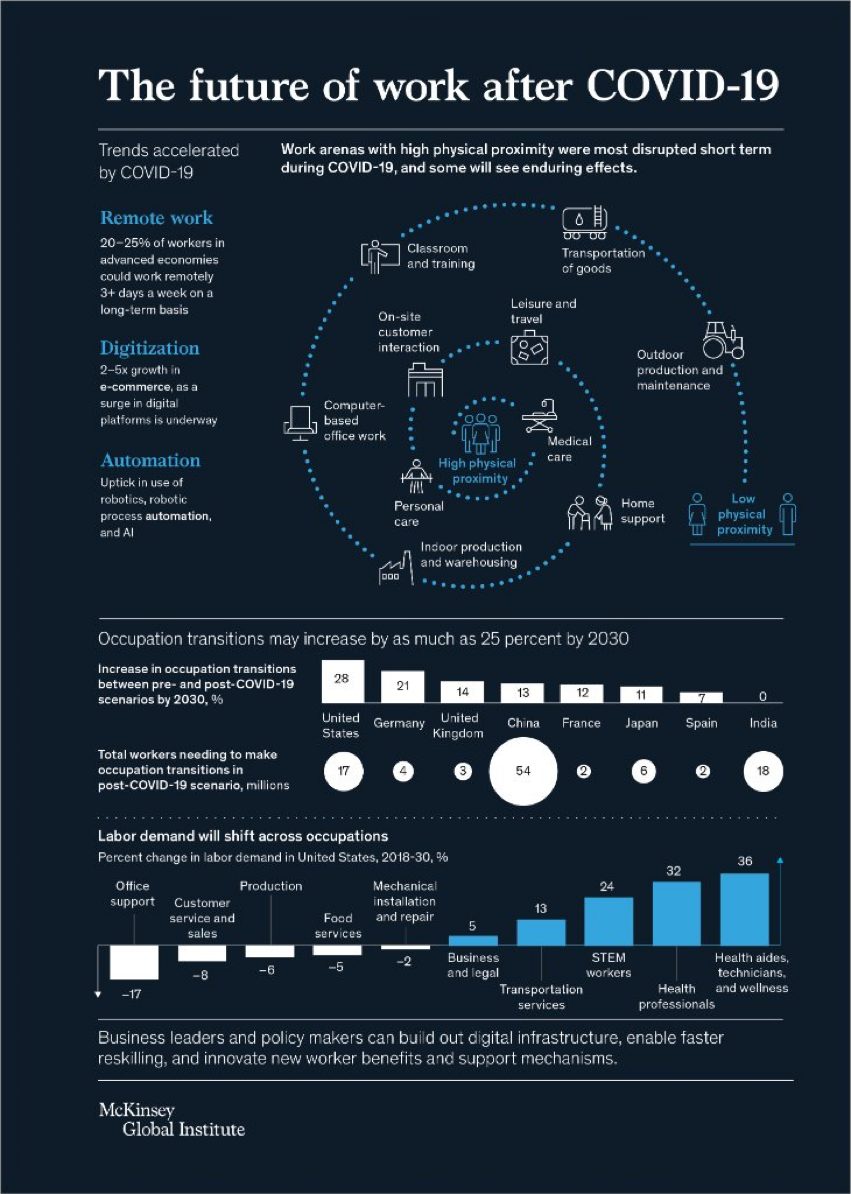
COVID-19 has had a dramatic impact on the way we work. While it’s too early to tell whether some of these changes are permanent, it would take a brave person to bet against trends towards remote work, digitisation and automation. Check out this provocative infographic from the corporate consulting fortune-tellers at McKinsey: 

Legal updates: UK guidance of the rights of gig economy workers – the Uber case

The line between who is an employee and contractor has always been fuzzy, and never more so than now, with the gig economy. While tax authorities, legal commentators, and others have different views, it’s better to be safe than sorry – especially as most of the legal, tax and financial risks of getting it wrong fall on providers (as hirers). This month, we’ve been looking at the recent UK Supreme Court decision about the status of the Uber worker. Natasha Bernal, of Wired Magazine, has an interesting take on the implications of the decision for gig workers in the UK and internationally here.

Organisation success: how to define and improve your risk culture

To thrive in uncertain times, you need a strong risk culture. This requires a clear acknowledgement of your exposure to risk, and a commitment to manage it. A provider’s success may also depend on its commitment to values like responsiveness, transparency, and respect. 

According to Richard Higgins and colleagues, defining your risk culture involves thinking about your organisation’s confidence, openness, challenges, speed of response, level of care, communication practices, tolerance for risk, level of insight, adherence to rules, and your team’s ability to cooperate. Once you’ve measured your organisation’s current status for each of these elements, you can address any shortcomings, using an influence model composed of four elements: understanding and commitment, role modelling and leadership, capability building, and formal reinforcement mechanisms. For a detailed blueprint for how to do this, read more here.

Frames of mind to improve your marketing

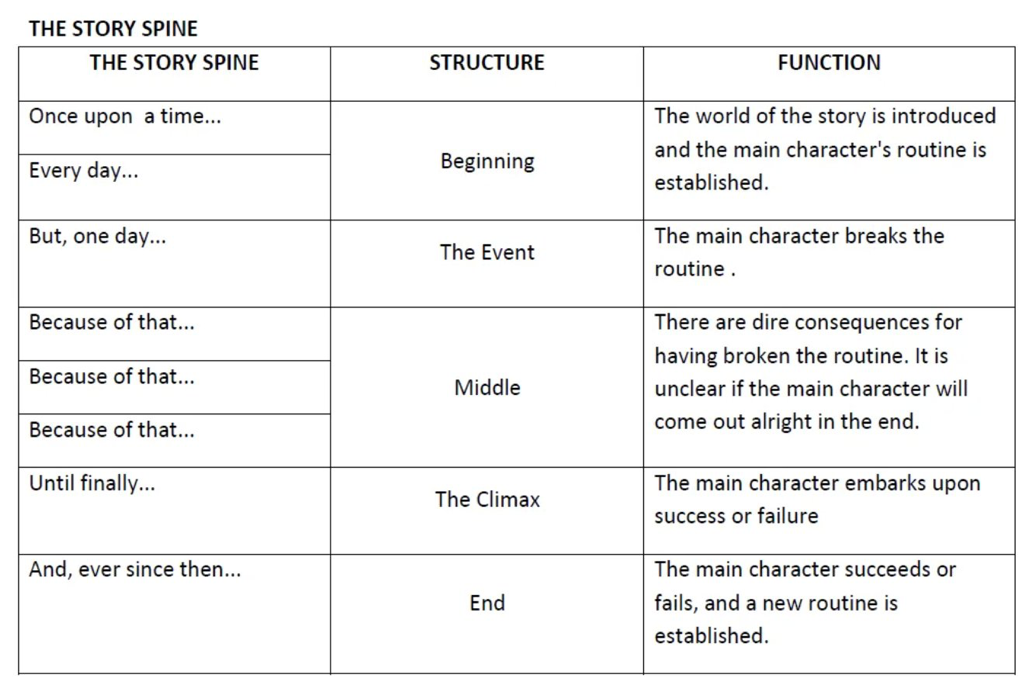
Way back in 1991, Kenn Adams developed the “Story Spine” – an 8-sentence basic structure that underpins thousands of human stories – everything from classical myths, to Pixar movies, to marketing campaigns. This framework can be adapted easily for a provider’s traditional marketing efforts, social media, blogs, YouTube videos, staff training days  – any material that tells your story. Just remember: the hero of your story should be your client – not you! Thanks to @alexgarcia_atx for this practical summary: 

To hear more about this useful model from Kenn himself, check out this short video.

Tips for practice

Procrastination, perfectionism, and the imposter syndrome are all forms of resistance – invisible forces that get in the way of us sharing our best work with our clients and participants, and the world. To overcome resistance, it helps to have a mentor – someone to push you on when you want to turn back or give up. There’s no-one better placed for the fight than Steven Pressfield, author of “The War on Art” and “Turning Pro”. If you are coming up against a blank page, or something else that stops you from doing the work that matters, I recommend Steven’s free audio course, which you can access here: Steven Pressfield’s The War of Art.

That’s it for this month’s ALOFT.

Find these snippets interesting?

If so, sign up for ALOFT and receive information gathered by a real world Provider for Providers that is actually useful in your inbox each month.

  • « Go to Previous Page
  • Page 1
  • Interim pages omitted …
  • Page 9
  • Page 10
  • Page 11
  • Page 12
  • Page 13
  • Page 14
  • Go to Next Page »

Primary Sidebar

Recent Posts

  • Small NDIS allied health providers: keep moving, and don’t give up
  • Thriving Kids: will ‘targeted supports’ deliver what children and families need?
  • Thriving Kids in Schools: Will it Work?
  • Thriving Kids Programs Part 3: Positive Partnerships
  • The Key Worker Model for young children with developmental delay or disability: does it actually improve child outcomes? 

Subscribe to our blog

Sign-up to subscribe to our blog and receive notifications of new posts by email.

Products

  • NDIS Worker Screening Policy and Risk Management Plan Template $65.00 including GST
  • NDIS Incident Management and Reportable Incidents System Policy and Procedures $75.00 including GST
  • Code of Conduct for NDIS Providers and Health Providers $65.00 including GST
  • Zero Tolerance Policy Zero Tolerance Policy (Plain English) $40.00 including GST
  • NDIS Emergency and Disaster Management Plan Framework NDIS Provider Emergency and Disaster Management Plan Framework $65.00 including GST
  • LinkedIn
  • Twitter

Check out our NDIS provider and health provider resources Go to Shop

The Provider Loft

Copyright © 2025 Banter Speech & Language Pty Limited t/as The Provider Loft